

At Mali Rising, our Girls’ Project does a lot to get girls into school and help them succeed there – from tutoring to soccer matches to school fee subsidies. However, sometimes we are reminded that even the basic act of building a school literally opens doors to girls in search of an education. I was reminded of this recently during a discussion with a mother of one of our students.
Friday Fun Facts About Mali
By Merritt Frey, Executive Director
I recently had my 7 year anniversary as the Executive Director of Mali Rising…it is hard to believe! The anniversary has me thinking about how much I’ve learned over those years and how much I’ve grown to respect the people of Mali and love the culture of the country. On this cold Friday morning when I feel so far away from the warmth of the climate and people, I thought I’d share a few fun Mali facts to help you know the country a little better too.
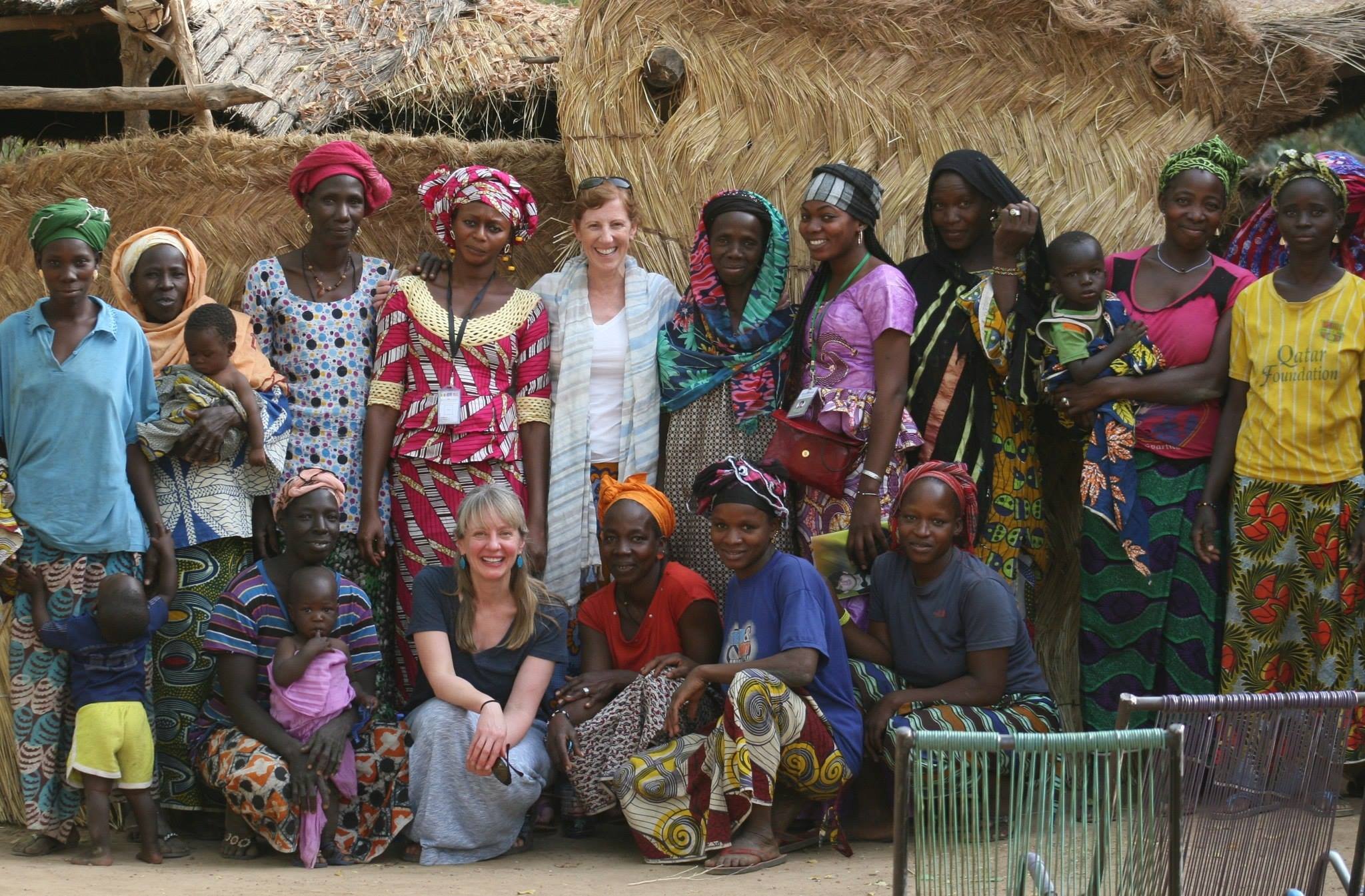
This great picture is the perfect reminder of my first trip to Mali in 2016. This is the women of Simidji - home to Mali Rising’s Sue Chung Chui Middle School, Mali Rising staff member Hindaty, board member Jill, and me (bottom left/center).
FACT #1
Mali’s name comes from the Bambara word for hippopotamus, which can be found in the Niger River that winds its way through the country. As a side note, the name of Mali’s capital, Bamako, comes from the Bambara word meaning "place of crocodiles" or in some interpretations “the tail of the crocodile.”
FACT #2
Although today Mali is one of the poorest countries in the world, it used to be one of the very richest. Its great wealth was built on trading of salt and gold and the country was a center of scholarship and learning. (https://www.worldatlas.com/articles/10-interesting-facts-about-mali.html)
FACT #3
The prime meridian passes through the city of Gao in Mali. This means you can stand with one foot in each hemisphere if you visit Gao! (https://www.onhisowntrip.com/most-interesting-facts-about-mali/)
FACT #4
Mali achieved independence from France (which colonized much of West Africa) in 1960. This makes Mali quite a new democracy, and the legacy of colonization continues to cause issues today.
FACT #5
Mali’s economy is largely based on agriculture, with cotton being the primary export crop. Approximately 80% of the population is involved in farming or fishing as their main livelihood. Gold mining also contributes a significant amount to the country’s exports. Together, gold and cotton make up approximately 80% of the country’s exports. (http://justfunfacts.com/interesting-facts-about-mali/ and https://www.economy.com/mali/indicators).
Every country and every place has a complicated history and context. It has been a pleasure to have the chance to learn a little bit about Mali each year and to have my understanding of the place and people grow at the same time. It is such a good reminder to always be curious about how we are all the same and how we are all different!
Inspired by what you’ve read? Donate to Mali Rising to be part of keeping this work going!
Great Teachers Make Great Schools
Mali’s teachers face many unique challenges, such as class sizes of more than 100 students and a lack of textbooks. But one challenge they face is one that any teacher around the world would recognize – how to engage their students and encourage questions and discussion. At a recent Mali Rising Teacher Training, we tackled this exact problem and inspired one young teacher -- Benzamé Sanou – to return to his classroom with new ideas and new energy.
Sustainability is Key to School Maintenance
Building and opening a new school is one of the most exciting activities at Mali Rising Foundation. However, once the school is complete we turn the building over to the local village to own and manage. This is a big responsibility, and maintenance requires skills. That’s why one of the ways we work with our partner villages is on-going maintenance trainings. To keep the schools safe and comfortable, we train School Management Committees – which are kind of like the PTAs in the U.S. – in various skills. I recently trained the Committee at both Lareen Mellor Middle School and Gary Hudson Elementary School.
Teachers Helping Teachers
Small Investments = Big Return for Girls' Education
Boys Explore Education as a Human Right
In Mali, girls’ education is very challenging matter especially in rural areas. Although girls are often very interested in education, many of those around them may resist the idea. A girl’s parents or even her own brothers may not be supportive of the girl’s wishes to stay in school. That’s why Mali Rising’s work to help girls’ education can’t focus only on the girls – we must reach the parents and boys as well.
Quick Update On Our Newest School
A Mali Rising Graduate Gives Back
A New School Rises
Is there anything more exciting than seeing a new school take shape? I’m a little bit biased, but I say no. That’s why I’m so pleased to share a short update from our school #26. This school is located in the town of Tentoubougou, quite near another of our schools which is currently over-crowded. We are hoping this school will relieve crowding at the existing Leon W. Peter Harman Middle School.
